
The Benefits of Merkle Trees Outside Blockchain

Merkle trees come up often in blockchain discussions, but their use extends well beyond that context.
They allow you to verify large datasets by comparing a small set of hashes instead of reading every file or record. This makes them both quick and accurate.
In this guide, we'll take a closer look at the benefits of Merkle trees and where you can leverage their strengths to improve data integrity.
This is Merkle trees, explained.
What Is a Merkle Tree?
Think of a Merkle tree as a way to turn a large file into a single, short, accurate value. Using that value, you can check if your data is correct.
How the Process Operates
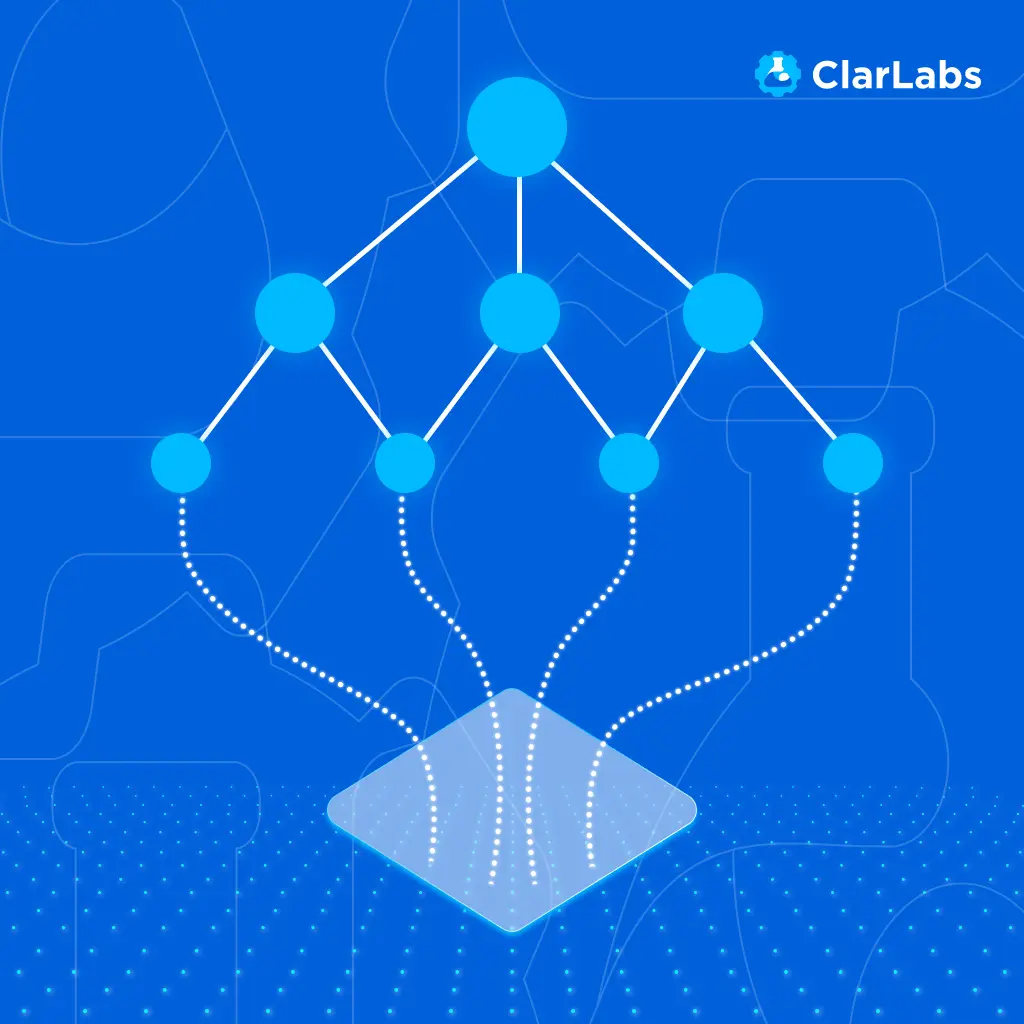
Start with a file split into small pieces. Each piece runs through a hashing function and becomes a short code. These codes pair up, then each pair hashes again.
This process repeats until one final value remains at the top. This top value becomes a type of digital fingerprint for the full dataset.
If the input stays the same, the hash stays the same. But if something changes, the final hash changes as well.
Why This Structure Works So Well
This structure can save huge amounts of time when you need to check large datasets. You don't need the full file to confirm one part. Instead, you trace a small path of hashes from that part to the root.
That path gives you enough proof to verify that the data is correct. That's why Merkle trees and data integrity go hand in hand. If someone alters just one piece, they break the hash chain, and the difference is visible instantly.
Why Merkle Trees Are Useful Beyond Blockchain
In blockchain, Merkle trees make it possible to verify that a transaction belongs to a block by checking a small proof path back to the Merkle root, rather than processing the full set of transactions again.
But, they offer a ton of practical value in other systems, too. Anytime data is transferred, grows quickly, or is drawn from a source you may not trust fully, a Merkle tree can verify integrity with a small set of hashes, isolate where a mismatch occurred, and reduce the amount of data that needs to move throughout the network.
Many modern data systems use verification methods that leverage some of the same logic as Merkle trees.
But Merkle trees are unique because they are always efficient regardless of the scale.
Below are some of the benefits:
- You can verify data fast without revisiting every part again.
- Small changes are easy to detect because any alteration, regardless of size, affects the final hash.
- There's no need to move as much data since your systems can share hashes in place of the complete files.
- Larger datasets won't slow down the verification process.
- You can compare data over several systems without syncing everything first.
Where Merkle Trees Are Used Outside Blockchain
There are many different compelling Merkle tree use cases. Systems that store, move, and verify large amounts of data day after day are well-positioned to benefit.
Distributed Systems And Databases
Distributed systems store data over multiple servers, which may be situated in different locations. Each copy needs to be consistent with the others. That becomes difficult when datasets grow large or are updated regularly.
Merkle trees compare data without transferring full datasets between systems or reprocessing every record. Each node creates a tree using its local data, and then it only shares the top hash. If the top hashes match, the data matches, too. If they differ, the system traces the mismatch through the tree and finds the exact point of change.
This approach reduces the amount of data that needs to move between servers. It also speeds up syncing, since systems exchange only small hash values instead of complete records.
File Systems and Cloud Storage
File systems and cloud storage services rely on integrity checks during uploads and downloads. Large files can take time to transfer, and errors can occur during that process
Merkle trees verify each part of a file:
- The system checks each file chunk against a known hash path.
- The final root confirms whether or not the file matches the original version.
- A mismatch reveals exactly which chunk failed verification.
- The system requests only the affected chunk instead of the full file.
Content Delivery Networks (CDNs)
Content delivery networks serve files from servers spread over many regions. Each server needs to deliver the correct version of a file at any time.
Merkle trees support this by making validation quick and consistent:
- Each server verifies cached files against a known root hash.
- The system detects altered or outdated content through hash mismatches.
- Validation happens without pulling full files from origin storage.
Global servers are able to stay aligned even without full syncs. There's less chance of serving incorrect content. It also ensures response times are stable when traffic increases.
Version Control Systems
Version control systems like Git track changes to code over time. Each file and each update is stored as a hash, which creates a structure similar to a Merkle tree.
When a developer makes a change, that change updates the related hashes all the way up to the top. This creates a complete, traceable link between each change and the exact state of the repository at that point in time.
Developers can then verify that a specific version is correct by checking its hash; they don't need to inspect every file manually. This makes collaboration safer as well since any unexpected change is visible through the hash structure.
How Merkle Trees Improve Data Trust
Data accuracy in distributed and multi-source environments is critical. Why? Because data may move between systems that don't share full context, and errors or changes can occur during storage or transfer. When that happens, you need a way to confirm that what you received still matches the original.
Merkle trees verify data integrity using hash comparisons and expose exact points of change through structured hash paths. Here's how that leads to data trust.
Detecting Tampering Instantly
In distributed and storage-heavy systems, trust means you can confirm that data has not changed since a known, trusted state. Merkle trees support this outcome by providing a reliable, repeatable way to detect any modification and trace it to a location.
Consider a backup stored in a cloud system as an example. The system stores a known root hash from when the backup was created. Later, during a routine check, it recalculates the root from the stored data. If one small block has been altered or corrupted, the new root no longer matches the original.
Instead of rechecking the full backup, the system follows the hash path to find the block that changed. This reduces the time needed to detect issues and limits how much data needs to be revalidated.
This is critical for trust because verification cannot depend on assumptions about the system or storage layer. It must depend on a deterministic check. If the root matches, the data is intact. If it doesn't, the system has evidence that something changed and where it happened.
Verifying Data From Untrusted Sources
You need to be able to validate data without depending on who provided it. This is critical if your data travels between external services or APIs.
Instead of relying on claims, Merkle trees check whether the data matches a known, trusted state:
- The system holds a trusted root hash as a reference.
- Incoming data is validated against that reference.
Let's say a system retrieves a file from an external network. It doesn't assume the file is correct. Instead, it rebuilds the hash path for each segment and compares the result to the stored root.
- Each segment is verified through its hash path.
- Only matching segments are accepted into the dataset.
- Any mismatch leads to rejection of that specific segment.
When Should You Use a Merkle Tree
Merkle trees solve specific problems well, but they're not always the right choice.
When It Makes Sense
Merkle trees can be ideal in situations where data volume and movement lead to verification challenges. For example, you might:
- Work with large datasets that take time to transfer or check
- Run systems over multiple locations that must be synced
- Receive data from sources that can't be trusted
- Need to verify data often
- Want to detect exactly where a data mismatch occurs without scanning everything
When It Might Be Overkill
Merkle trees add structure and processing, which may not always be necessary. Using one could be overkill in these situations:
- You manage small datasets that are quick to verify in full.
- You operate in low-risk environments with controlled data flow.
- You can rely on simple checksums for basic integrity checks.
If your data is small or rarely changes, a full hash check can be faster and easier to maintain.
Why Merkle Trees Are Becoming More Important
Data volumes continue to grow. At the same time, more organisations are using systems that leverage cloud platforms and interact with external services. The more systems interact, the more points exist where data can change or fail.
Merkle trees address this by making verification independent of data size and system boundaries. They reduce the amount of data required to confirm accuracy, so you can validate large datasets without reprocessing everything.
Looking ahead, as systems become more distributed and data flows increase between services, the need for efficient verification will continue to rise. Expect Merkle-based structures to appear more frequently in any environment where data integrity and accuracy are non-negotiables.
If you're looking for a way to improve your data verification and integrity, get in touch.
Written by Chris Russell
As an ISO 27001 Lead Auditor, CSA STAR Lead Auditor, and Azure Certified Engineer, Chris Russell brings years of deep industry expertise to the table. He is passionate about bridging the gap between technology and business strategy to spark innovation and deliver measurable results.
More from the Lab
 COMPLIANCE INSIGHTS
Do You Need an ISO 27001 Consultant?
Do you need an ISO 27001 consultant? Or can you manage the process in-house? This guide unpacks the value of ISO certification help so you can make an informed choice.
 CASE STUDY
Case Study: How a SHEQ SaaS Company Strengthened Azure Governance for ISO 27001
A SHEQ SaaS company improved Azure governance, strengthened security controls, and aligned operations with ISO 27001 with ClarLabs. Read the case study.